
Reviews - La Grazia
La Grazia
Reviewed By Rach Stanton
La Grazia
Paolo Sorrentino's La Grazia is a beautifully composed, quietly profound meditation on power, morality, love and the complexities of being human. With his characteristic visual elegance and philosophical curiosity, Sorrentino delivers a film that is both intellectually stimulating and unexpectedly moving.
At its centre is Toni Servillo, magnificent as Mariano De Santis, the fictional President of Italy approaching the end of his term in office. A man defined by duty, restraint and an unwavering commitment to the law, De Santis finds himself confronting questions that cannot easily be resolved through reason or political principle. Faced with difficult decisions about justice, mercy and personal responsibility, he must consider not simply what is legally right, but what it means to act with compassion.
Servillo gives an extraordinary performance, conveying a remarkable depth of feeling through the smallest gestures and expressions. His portrayal reveals the vulnerability beneath the carefully controlled exterior of a man accustomed to authority. The relationship with his daughter adds warmth and emotional complexity, while his enduring grief for his late wife introduces a more intimate exploration of memory, love and the things we never quite manage to let go.
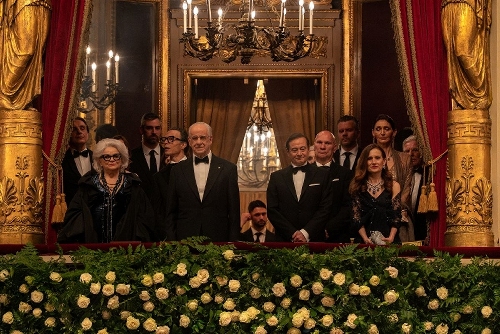
Visually, the film is unmistakably Sorrentino. Every frame feels meticulously considered, from the grandeur of Italy's presidential interiors to the striking contrasts between institutional formality and moments of private reflection.
What makes La Grazia particularly compelling is its refusal to offer easy answers. Its central moral dilemmas invite the audience to question the relationship between justice and forgiveness, certainty and doubt, and whether true wisdom might lie in recognising the limits of our own convictions.
The film unfolds at a measured pace, allowing its ideas and characters room to breathe. Some may find its philosophical conversations demanding, but the rewards are considerable. Beneath the visual splendour and political intrigue lies a surprisingly tender portrait of a man learning that grace, in all its forms, requires courage.
La Grazia was very well received at Keswick Film Club, where its thoughtful storytelling, superb central performance and distinctive cinematic style made for a rewarding evening of film.
Elegant, intelligent and gently humorous, La Grazia is a reminder of cinema's ability to explore the most complicated questions of human existence with subtlety, beauty and compassion. It is Sorrentino working at a wonderfully assured level, producing a film whose ideas linger long after the closing credits.
Find A Film
Search over 1525 films in the Keswick Film Club archive.
Film Festival

27 Feb - 1 Mar 2020
Friends
KFC is friends with Caldbeck Area Film Society and Brampton Film Club and members share benefits across all organisations
Awards
Keswick Film Club won the Best New Film Society at the British Federation Of Film Societies awards in 2000.
Since then, the club has won Film Society Of The Year and awards for Best Programme four times and Best Website twice.
We have also received numerous Distinctions and Commendations in categories including marketing, programming and website.
 Talking Pictures
The KFC Newsletter
Links Explore the internet with Keswick Film Club