F-Rated
Our programme of films featuring the work of female directors has coincided with the development of the F-rating, a new system designed to flag up the significant involvement of women in film, on either side of the camera.
The F-Rating Manifesto
The stories we see on screen influence our lives. We want to hear stories from everyone, not just from one section of society.
We want diversity in filmmaking, both on and off screen.
The F-rating was founded by Holly Tarquini at Bath Film Festival 2014 where we wanted to highlight films which feature prominent women both behind the camera and in front of it.
Every film which ticks yes to the one of the following questions receives the F-rating of approval:
- Does it have a female director?
- Is it written by a woman?
- Is/are there complex female characters on screen who exist in their own right (not simply there to support to the male lead)?
The F stands for feminist.
Feminism is: "The belief that men and women should have equal rights and opportunities." We believe that feminism benefits everyone.
Featuring
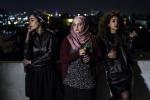
"After watching Maysaloun Hamoud's sparkling, taboo-breaking first feature 'In Between', audiences will have to seriously update their ideas about the lifestyle of Palestinian women in Israel" - Deborah Young, Hollywood Reporter.
Mark Kermode chose this as his film of the week in the Observer. Two women share a flat in Tel Aviv; "Laila is a force of nature, a chain-smoking, leather-jacketed lawyer who can drink and snort the boys under the table and takes pride in overturning the conventions of her profession and her gender. She lives with Salma, an aspiring DJ who works long hours in kitchens and bars and whose strict Christian parents don’t know she's gay". It won't be a surprise to know that, when the ultraconservative Muslim Nour moves in too, problems arise; but maybe not the ones you would expect...
Mark Kermode goes on to say that the director 'Hamoud identifies herself as part of a new wave of realist Palestinian cinema, looking beyond the conflicts of the West Bank and Gaza, and putting women proudly centre stage. Yet she is not afraid to portray the price of freedom in a patriarchal world… Hamoud, too, has paid a price. After being criticised for taking Israeli state funding, she found herself the subject of death threats and fatwas from fundamentalists, accused of disparaging or corrupting Muslim women, Elsewhere, 'In Between' has been rapturously received, with Hamoud receiving the 'Women in Motion Young Talents' award at this year's Cannes festival.
Isabelle Huppert, who selected her for the award, declared that 'the free spirited and joyful women [Hamoud] portrays… are true heroines of our time'. That's a sentiment with which I wholeheartedly concur". It takes a lot to make Mark Kermode happy, and all the Rotten Tomatoes critics and audiences agreed, so we reckon this is a film not to be missed.

"The opening sequence of 'Félicité', a moving and expansive fourth feature from the French Senegalese director Alain Gomis, is a gorgeous blur of chatter, movement and song. In a crowded bar in Kinshasa, the capital of the Democratic Republic of Congo, patrons drink and dance into the wee hours, their loud, bickering voices clashing with the music performed by the real-life local collective Kasai Allstars and a club singer named Félicité (Véro Tshanda Beya), whose somber gaze magnetizes the camera from the first frame" - Justin Chang, Los Angeles Times.
Félicité's life, already hard, is about to get a whole lot harder, however; her son has an accident and she has to find the money for an operation, and she has to find it now. She goes out on to the streets of Kinshasa calling in old debts and favours. "At every step she is met with the contempt and hostility of those she asks for help, including her own family" - Chang again.
"Félicité was the Senegalese entry to the Oscars and was up for the Golden Bear award at Berlin. The acting of Véro Tshanda Beya (a singer in Senegal, this is her first part), also gets praised - "Appearing in almost every scene, she carries the film in close-up, with strained subtle grimaces signalling a world of pain beneath" -
Kevin Maher, Times.
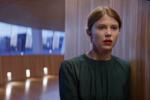
On the surface, like 'Call Me by Your Name', this is a film about teenage first love, but there the similarity ends. This love affair has very different consequences. Thelma arrives at a new college where she knows no-one. Soon after her meeting with Anja, a fellow student, Thelma starts to have fits. The tests she undergoes shows these as 'psychogenic non-epileptic seizures', which the doctor tell her are a physical reaction to a mental suppression. What is she suppressing and what brought it on now? It soon turns out that her parents may have something to do with causing this and that Anja may be the reason it is coming out now; Thelma is falling in love…
Merging Sci-fi and 'art house horror', we see Thelma's fits begin to cause involuntary damage to her surroundings; "Thelma is like 'Carrie' remade by Ingmar Bergman", as David Edelstein says in the New York Magazine. In case that puts you off more than it encourages, Sarah Stewart in the New York Post tells us "With its gray skies, moody ambience and ominous orchestral score, 'Thelma' fits the cliché about Scandinavian entertainment being dark as hell — in the best way. It's also gorgeous". Bring it on!
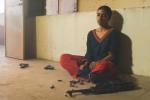
Independent's critic Geoffrey Macnab writes "British-Pakistani director Sarmad Masud's impressive debut feature is a surprising affair: a drama set in rural Pakistan and based on a true story but that plays like a feminist version of Howard Hawks' 'Rio Bravo'". In our perpetual hunt to bring you something different, how could we resist that?
"Nazo Dharejo, now legendary as 'the toughest woman in Sindh', was 18 in the early 1990s when her uncle launched a violent challenge to the ownership of her family's farm; land disputes are apparently ubiquitous in Pakistan, and certainly mere women could not be tolerated to occupy valuable land that should 'rightfully' belong to a man" - MaryAnn Johanson, Flickfilosopher.
The corrupt local law enforcement officers are unwilling to help, and having no money of their own to pay for support, Nazo, with her mother Waderi and her younger sister Saeda are left with two options - fight or flight. They chose to fight, taking on her uncle and his large band of mercenary soldiers. The result, as MaryAnn Johanson concludes, is "Tense, gripping, rife with tragedy but ultimately cheerworthy, 'My Pure Land' offers a gorgeous balance of action and drama in a setting that it both familiar and foreign, with a heroine I won't soon forget. And its feminism is an all-inclusive one that actively invites men to be allies. Yes, all men. Because you’ll only get left behind if you don't join us". Wait for us - we're coming!

Explore KFC
Links
Revisit 2014 Festival
15th Keswick Film Festival
We welcomed Dame Janet Suzman to Keswick to show her new film and look back at her career. Plus much more...
The KFF Blog

News, Views, Photos...
Read the latest news and views direct from the festival team. You will also find some photos from the last festival.
KFF On The Web

Vimeo