F-Rated
Our programme of films featuring the work of female directors has coincided with the development of the F-rating, a new system designed to flag up the significant involvement of women in film, on either side of the camera.
The F-Rating Manifesto
The stories we see on screen influence our lives. We want to hear stories from everyone, not just from one section of society.
We want diversity in filmmaking, both on and off screen.
The F-rating was founded by Holly Tarquini at Bath Film Festival 2014 where we wanted to highlight films which feature prominent women both behind the camera and in front of it.
Every film which ticks yes to the one of the following questions receives the F-rating of approval:
- Does it have a female director?
- Is it written by a woman?
- Is/are there complex female characters on screen who exist in their own right (not simply there to support to the male lead)?
The F stands for feminist.
Feminism is: "The belief that men and women should have equal rights and opportunities." We believe that feminism benefits everyone.
Featuring

Whilst films about sufferers from dementia have become more frequent, nearly all have shown the problems more from the point of view of the relations and friends rather than the sufferer. 'Familiar Touch' lets us travel along with Ruth on the journey from respected professional to patient, from living in a lovely home to supported living, showing her ups and downs, losses and gains, along the way.
Ruth has been a famous chef when she starts 'forgetting things'. We join her on the day she has finally been forced to accept the new reality and move into an assisted-living facility, she herself has chosen, though she doesn't remember doing so. "Ruth must gradually accommodate herself to the abrupt loss of her elegant home in Los Angeles, of independence and sense of self-worth – and to accept that her new, circumscribed life is more than the meagre sum of its parts. That it is still worth living" - Ela Bittencourt, Sight and Sound.
Sarah Friedland, the writer/director, has worked in a similar facility, so it should be no surprise that she has got the details of life there down to a T, but it is her choices in choosing the right small details to show us the changes that mark the film as so watchable. "Most observations are from Ruth's point of view. At her first communal meal, she's affronted when she's not presented a menu, and impatiently waves at the nurses gossiping with their backs turned to her. Their posture signals that she's not here to dictate her choices to others, but to follow routines – if not orders – instead" - Ela Bittencourt again. It is this soft touch from the director, alongside the amazing acting from Kathleen Chalfant that allows this film to be so empathetic to the suffering here.
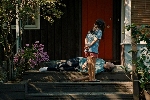
"A shoo-in for any 'best of the year' list, Sophy Romvari's debut film is a stop-you-in-your tracks debut about Jeremy, a young man with oppositional defiant disorder, and the parents who struggle to support him... Set amid the Spielbergian suburbs and pine coves of Canada's Vancouver Island in the early '90s, it follows an unnamed immigrant Hungarian family as they settle into their new life. The isolation that comes with being a ferry ride from the mainland is quickly magnified by their increasing sense of being left to manage an impossible situation alone. Their son's erratic behaviour has the police at the door and their neighbours twitching their curtains. Things are smashed. At one point, he climbs onto the roof and threatens to jump" - Phil de Semlyen, Time Out.
Based on Sophy Romvari's own childhood, and filmed mainly through the eyes of Sasha, an eight year-old girl, 'Blue Heron' follows the trials and tribulations of this family whose lives are dominated by the eldest child, Jeremy. The film is split into parts, the first sees the family settling in to their new home with Sasha being upset by her brother's behaviour. "Romvari shoots the family with a long, unobtrusive lens that lends a sense of authenticity to both the performances and to the texture of the domestic world depicted...In the second section, we are jolted into the present. Adult Sasha is a film-maker trying to make sense of a period of her life that her eight-year-old self failed to grasp. Borrowing the language of documentary, Romvari has her alter ego consult with a panel of social workers to learn what diagnosis and support her brother might have received had he been born two decades later" - Wendy Ide, Observer.
There is a third section which brings the past and present together and brings the film to a climax...but you are going to have to come and see it to find out what that is...see you there!
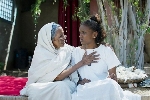
Life in a Sudanese village is dominated by cotton and Al-Sit, an old lady who fought off the British many years earlier. Her grand daughter Nafisa is happy with her life, hoping to marry Babiker, until Nadir arrives, selling the villagers on GM seeds, and looking for a wife. Nadir's mother sees him as a good bet, regardless of what Nadir thinks...
Director/writer "Mirghani gradually builds a sense of the pressures on Nafisa as she realises that her own desires may well be sacrificed for what is considered the greater good of the village. Her mother and grandmother have plans that pay little heed to what Nafisa wants...The pressures on her may be considerable, but her quiet determination to face them down makes for an appealing heroine" - Alan Hunter, Screen Daily.

Explore KFC
Links
The KFF Blog

News, Views, Photos...
Read the latest news and views direct from the festival team. You will also find some photos from the last festival.
2025 Festival

Quiet Life
Sweden, 2018. A mysterious syndrome affecting refugee children is sparking concerns among doctors...
KFF On The Web

Vimeo